
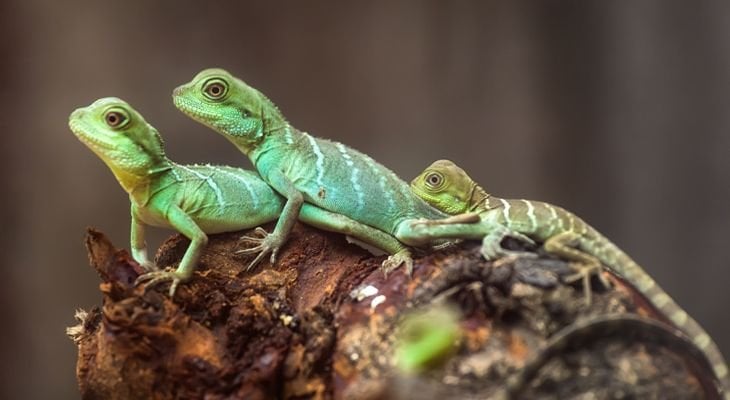
People with limited living quarters may find that reptiles such as lizards or turtles fit perfectly into their lifestyles. Before deciding on a reptile, learn as much as possible about them and their needs. Poisonous snakes and certain reptiles should never be kept as pets. Ask your veterinarian about the suitability of a particular animal before you make your decision. There are many things to consider before committing to a reptile as a pet.
Finding out if a Pet is Legal Where You Live
Many areas have enacted laws pertaining to keeping reptiles. Some are general and some are quite specific; in many places any reptiles that are considered dangerous (venomous snakes, alligators, etc.) are illegal but some places are even more restrictive (for example, in some states all constricting snakes including ball pythons are illegal).
Salmonella Risks and Prevention
All reptile owners need to be informed about Salmonella infections. While the risks shouldn't keep most people from keeping reptiles since with the proper management the risks are minimal. Still, owners should be aware of the risks, and the US Centers for Disease Control recommends that certain risk groups should be careful about contact with reptiles and amphibians.
The Importance of Light and Heat
Many problems with keeping reptiles can be traced back to not providing the proper environmental conditions, particularly heat. Proper lighting is also important for many reptiles. The equipment to provide the proper heat and light to captive reptiles is often quite expensive, but is absolutely essential to keeping pet reptiles healthy. It is important to find out exactly what conditions your reptile needs and never cut corners when it comes to meeting those conditions!
Why Choose Captive Bred Reptiles
There are numerous reasons why you should pick a captive bred reptile if at all possible, as explained here.
How to Pick a Healthy Reptile
It is important to keep in mind that depending on where you get a reptile, it may be very stressed, dehydrated, and prone to illness. Here are some items to look for when buying your reptile to increase the chances of picking out a healthy pet reptile.
While there are many types of reptiles that could be good pets, here we cover a few you could consider.
-
How to Keep Your Cat from Getting Fat
A fat cat may appear happy and provide visitors with a source of amusement, but feline obesity is certainly no laughing matter. Cats who carry excess weight have a heightened risk for diabetes, cancer, liver problems, degenerative joint pain and other conditions that could severely curtail its quality
Read more -
Is a Feral Cat Right for You?
In many ways, Tiger Kitty (or TK as he's known for short) isn't your typical feral cat. Unlike his still-wild counterparts who still roam around, homeless and often hungry, he now has a home. When his owners get home at night, he runs out to meet them and rubs against their ankles looking to be patted.
Read more -
Keep Cats Moving and Grooving
Keeping your cat active can help it burn calories and use muscles, tendons and ligaments that may often be seen catnapping. Burning calories is important for your cat. The more your cat moves and exercises, the more calories it will expend during the activity. Exercise will help to off-set the naps taken
Read more -
Litter Box Problems
One of the most common complaints that cat owners make is that a cat will not use its litter box properly. Usually it is a problem with the cat urinating outside the box, but occasionally a cat will be defecating outside the box, or a cat may not want to use his litter box at all! First the cat should
Read more